Are VR Walkthroughs Worth It for Development Projects In LA
A VR walkthrough can make an unbuilt project feel real before there is drywall, flooring, or a view from the balcony. That is powerful. It can also be expensive, overbuilt, and hard to justify if the sales or leasing strategy does not actually need it.
That is the honest answer we give developers in Los Angeles when they ask us whether VR belongs in their marketing package.
At 3D Visionaries in El Segundo, we create renderings, animations, and immersive visuals for real estate projects. We like VR when it solves a real problem. We do not recommend it just because it sounds impressive.
So, are VR walkthroughs worth it for development projects in LA? Sometimes, yes. Often, no. The right answer depends on the project stage, price point, sales process, audience, and how the asset will be used.

1. What a VR walkthrough actually gives you
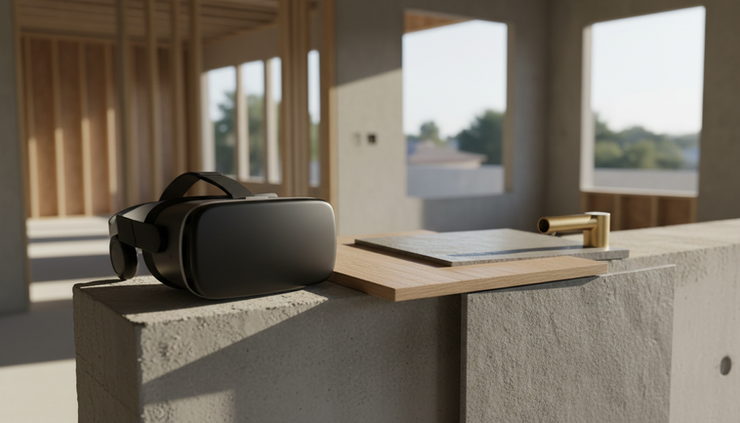
A VR walkthrough is an immersive 3D experience that lets someone move through a space as if they are inside it. In real estate, that might mean walking through a future condo, hotel suite, multifamily amenity deck, lobby, clubhouse, restaurant, or mixed-use retail space before construction is complete.
A good VR architectural walkthrough helps a viewer understand:
Room scale
Ceiling height
Sightlines
Circulation
Finishes
Natural light
Views
The relationship between indoor and outdoor areas
That last point matters in LA. A still rendering can show a great living room. A flythrough can show the mood. VR can help a buyer feel how the great room connects to the terrace, how the terrace frames the city, and how the primary suite sits away from the entertaining areas.
That sense of presence is the main reason VR exists.
But presence is not always the same as persuasion. A marketing asset still has to fit the buying journey. If someone will only see the project on a website for 20 seconds, VR may be the wrong tool. If a broker will guide a serious buyer through a $10 million [CONFIRM] home in a sales gallery, VR may make much more sense.
VR is strongest when the viewer has time, intent, and a reason to explore.
2. VR is not the same as a 3D flythrough
Developers often compare VR and animation as if they solve the same problem. They overlap, but they are not interchangeable.
A 3D flythrough is directed. The viewer watches a planned sequence. The camera path, pacing, music, lighting, and reveals are controlled. It is great for storytelling.
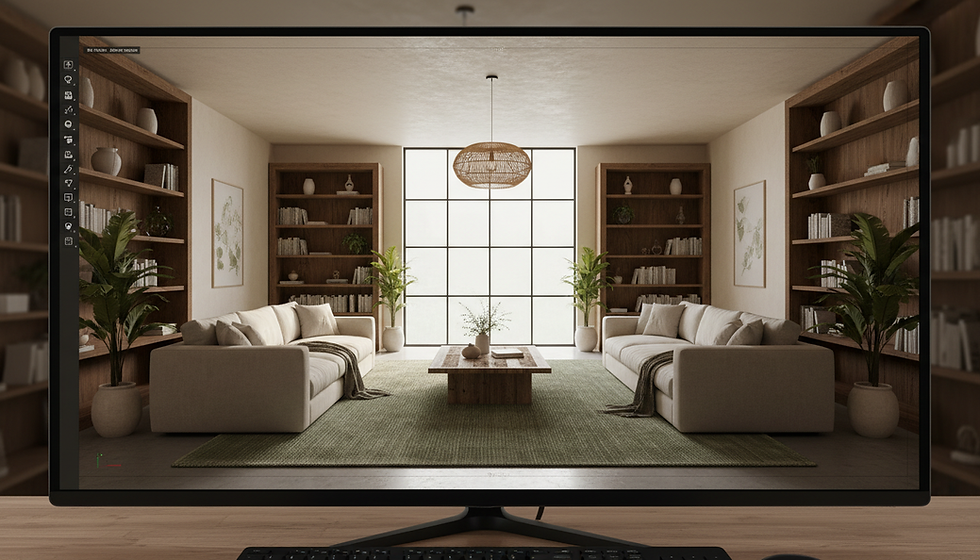
VR is interactive. The viewer controls where they look and, depending on the build, where they move. It is great for spatial understanding.
Here is the practical VR vs 3D flythrough comparison we use when advising clients.
Marketing asset | Best for | Main strength | Main drawback | When we recommend it |
Still renderings | Websites, brochures, signage, investor decks, MLS-style listings | Fast to understand and easy to distribute | Limited sense of movement or flow | Almost every development project |
3D flythrough animation | Launch videos, sales presentations, paid media, leasing campaigns | Controlled story and emotional pacing | Viewer cannot explore freely | When the project needs a polished narrative |
VR walkthrough | Sales galleries, private buyer sessions, investor presentations, design validation | Strong sense of scale and presence | More complex to produce, present, and update | When spatial experience affects the decision |
Interactive web tour | Remote browsing, lead qualification, leasing support | Easier access than headset-based VR | Less immersive than full VR | When broad access matters more than immersion |
Physical model | Sales centers and community presentations | Tangible overview of massing and site context | Less effective for interiors and finishes | Large master plans or complex sites |
This is where many projects go wrong. They choose VR because it feels premium, but the campaign really needs a strong animation or a set of excellent stills.
A buyer will not put on a headset in every context. A planning commissioner will not always want an immersive interior tour. A casual website visitor may not download an app or navigate a full 3D space.
The format matters as much as the visual quality.

3. When VR walkthroughs are worth it
VR earns its place when it helps someone make a higher-confidence decision. That decision might be to buy, lease, invest, approve, or commit before the project is complete.
The project is high-value enough to support a deeper sales tool
For luxury residential, boutique hospitality, high-end multifamily, and select mixed-use developments, one serious buyer or tenant can justify a more immersive experience.
If the average transaction value is high, and the sales process includes private tours or broker-led presentations, VR can support that process well.
This does not mean every high-end project needs VR. It means the economics are more likely to work. A custom VR experience can require more modeling, programming, testing, and coordination than a standard rendering package. Project pricing may range widely depending on scope, interactivity, headset support, and revisions [CONFIRM].
The space is hard to understand from plans
Some projects are simple. A rectangular unit with standard finishes may not need VR.
Other projects are harder to read:
Terraced hillside homes
Multi-level penthouses
Adaptive reuse projects
Amenity-rich multifamily communities
Indoor-outdoor hospitality spaces
Retail environments with unusual circulation
Projects with important view corridors
In LA, this comes up often. Sloped lots, tight infill sites, rooftop decks, courtyards, and layered indoor-outdoor spaces can be hard to explain with floor plans alone.
VR can help the stakeholder feel the relationship between spaces.
The sales process is guided
VR works best when someone is there to guide the experience.
That might be a broker, sales director, leasing agent, developer, or investor relations lead. The guide can say, “Look toward the west-facing terrace,” or “Now walk back toward the kitchen and notice the line of sight to the dining area.”
Without guidance, some viewers wander, miss key features, or get distracted by the controls.
For that reason, VR is often better in a sales gallery than as a public web-only asset.
The design is stable
VR is not ideal when the design is changing every week.
If the floor plan, finishes, lobby concept, amenity mix, or exterior design are still in flux, we usually suggest waiting. Changes inside VR can be more involved than updates to still images, especially if the experience includes navigation, interactions, or multiple finish options.
VR makes more sense once the project has enough design certainty to avoid constant rework.
The experience will be used more than once
A VR asset should not be built for a single meeting unless that meeting has extraordinary value.
It works better when it can support:
Repeated sales appointments
Broker previews
Investor updates
Leasing events
Sales gallery visits
Design reviews
Remote follow-up sessions
The more times the experience is used with qualified people, the easier it is to justify.
4. When we recommend against VR
Here is the part many studios avoid saying clearly. We do not think VR is the right answer for every development project.
In some cases, we would actively recommend against it.
Do not use VR if the budget is tight and you still need core visuals
If the project does not yet have strong still renderings, a clean site plan, sales floor plans, and a clear project story, start there.
VR should not come before the basics.
A beautiful immersive experience will not fix weak positioning, unclear unit mix, poor photography of the surrounding area, or missing marketing materials. In many campaigns, a strong set of hero renderings and a sharp animation will do more work than VR.
Do not use VR for low-intent audiences
If the asset is mainly for social ads, email blasts, landing pages, or quick awareness, VR is usually too much friction.
Most people will not stop, load a full experience, learn the controls, and explore deeply unless they are already interested. For broad outreach, a short animation or strong still image often performs better because it asks less from the viewer.
This is a common mistake in virtual reality real estate marketing. Teams build an impressive tool, then realize the target audience is not in a setting where they will use it.
Do not use VR if the project is simple
A straightforward apartment unit, small retail shell, or standard model home may not need immersive navigation.
If the main selling points are location, price, finishes, and availability, VR may not add enough value. Good renderings can show the finishes. A flythrough can show flow. A simple interactive tour can support remote viewing.
VR is most useful when the space itself is the question.
Do not use VR if the sales team will not use it
This is a practical issue, and it matters.
If the sales or leasing team is not comfortable putting buyers into VR, keeping headsets charged, explaining controls, or resetting the experience between appointments, the tool may sit unused.
A VR walkthrough needs an owner. Someone has to know how to run it and when to introduce it.
If no one on the ground wants that responsibility, we would rather recommend an asset the team will actually use.
Do not use VR too early
Early VR can create false certainty. A project may look more final than it is. That can cause confusion if finishes, layouts, or amenities change later.
If a developer needs early fundraising visuals, stills and controlled animations are often safer. They communicate intent without implying every detail is locked.
5. LA projects have a few special considerations
Los Angeles development is not one market. A hillside spec home, an El Segundo creative office conversion, a Westside multifamily project, and a downtown adaptive reuse building all have different sales pressures.
Still, a few local patterns affect the VR decision.
Views are often part of the value
In many LA projects, views carry real weight. Ocean, city, canyon, and mountain views can shape buyer interest.
VR can help show how views appear from different rooms, terraces, and levels. That said, view accuracy needs careful handling. If the view is a major selling point, the visual team should work from reliable site photography, survey data, drone references, or other approved materials. Any claim about exact view representation should be verified [CONFIRM].
Indoor-outdoor flow matters
LA buyers often care about the transition from kitchen to terrace, bedroom to balcony, lobby to courtyard, or amenity lounge to pool deck.
This is one of the stronger use cases for VR. Still renderings can show individual moments. VR can connect them.
Entitlement and community conversations may need restraint
VR can be useful for explaining project scale, circulation, and public-facing areas. But it can also feel overly polished for sensitive community or entitlement conversations.
In some cases, a clear massing model, shadow study, streetscape rendering, or simple animation may be more appropriate than a glossy immersive tour.
The right format depends on the audience and the point in the process.
Remote buyers may need more than images
Some LA luxury and investment sales involve buyers who are not local. VR can support remote confidence, but only if the experience is easy to access and guided well.
A headset-based experience may be great in a sales gallery. For remote buyers, a web-based interactive tour or guided video call may be more practical.
6. How we decide whether VR belongs in the scope
Before we recommend VR, we ask a few simple questions.
Who will use it?
If the answer is “everyone,” the plan is probably too vague.
A VR walkthrough should be built for a specific user:
A luxury buyer comparing unbuilt homes
An investor reviewing the amenity experience
A leasing team presenting premium units
A hospitality operator evaluating guest flow
A broker guiding private appointments
The user shapes the experience.
Where will they use it?
A headset in a sales gallery is very different from a browser-based tour on a laptop. A trade show environment is different from a private showing.
The setting affects everything from interface design to the level of detail.
What decision should it support?
This is the most important question.
A VR walkthrough should help someone decide something. If the goal is only “make the project look high-tech,” we would not recommend it.
Better goals include:
Help buyers understand a nonstandard floor plan
Show the value of a view premium
Explain amenity adjacencies
Support pre-sales before a model unit exists
Reduce confusion about scale
Help a sales team tell a consistent story
What assets are already needed?
VR does not exist in isolation. Most projects still need renderings, floor plans, finish visuals, exterior views, and sometimes animation.
If the budget can only support one premium asset, we often recommend the asset with the widest use. In many cases, that is still renderings or a flythrough, not VR.
How often will it be updated?
If the project will need frequent changes, we plan for that early or suggest delaying VR. Revision-heavy projects can become inefficient if the immersive asset has to be rebuilt repeatedly.

7. Our honest recommendation
VR walkthroughs are worth it when they match the project, sales process, and audience.
They are not worth it when they are added late, used as a novelty, or expected to carry the whole campaign.
For most LA development projects, we would think about the visual package in this order:
Start with the story of the project.
Build strong still renderings that can work everywhere.
Add animation if the project needs mood, sequence, or launch content.
Add VR only if immersion will help a qualified viewer make a decision.
That last point is the filter.
If the buyer needs to feel the space before it exists, VR may be a smart investment. If the buyer only needs a fast impression, it probably is not.
At 3D Visionaries, we would rather talk a client out of VR than build something impressive that no one uses. The best marketing asset is the one that fits the job.
If you are weighing VR for a development in Los Angeles, we can help you sort it out before you spend production budget. Send us your plans, stage, audience, and sales goals, and we will give you a candid recommendation.
Book a free VR assessment with 3D Visionaries to find out whether a walkthrough makes sense for your project.


Comments