Harnessing AI to Revolutionize Architectural Visualization and Design Trends
Architectural visualization has always been a crucial part of the design process, helping architects, clients, and stakeholders see a project before it is built. Today, artificial intelligence (AI) is transforming this field, offering new tools that speed up workflows, enhance creativity, and improve accuracy. This post explores how AI is reshaping architectural visualization and influencing design trends, providing practical insights and examples to help professionals stay ahead.
How AI Improves Architectural Visualization
AI technologies bring several advantages to architectural visualization, making the process more efficient and detailed.
Faster Rendering Times
Traditional rendering can take hours or even days. AI-powered rendering engines use machine learning to predict lighting and materials, reducing rendering times from hours to minutes. This speed allows architects to iterate designs quickly and respond to client feedback without delays.
Enhanced Realism
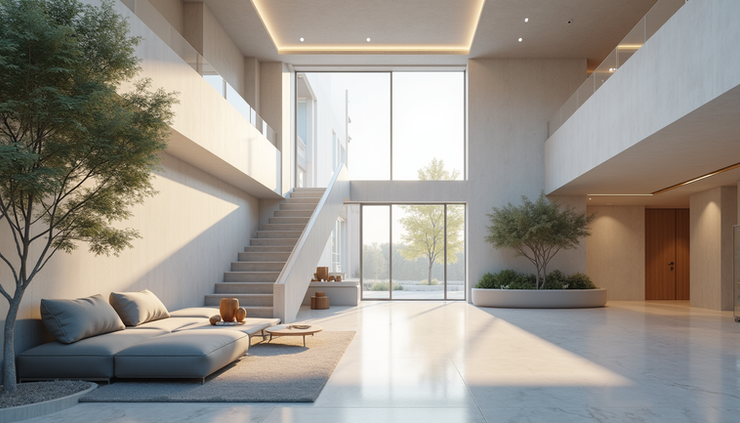
AI algorithms analyze vast datasets of real-world materials and lighting conditions. This enables them to generate highly realistic textures, shadows, and reflections that closely mimic natural environments. The result is visualizations that feel more immersive and convincing.
Automated Scene Generation
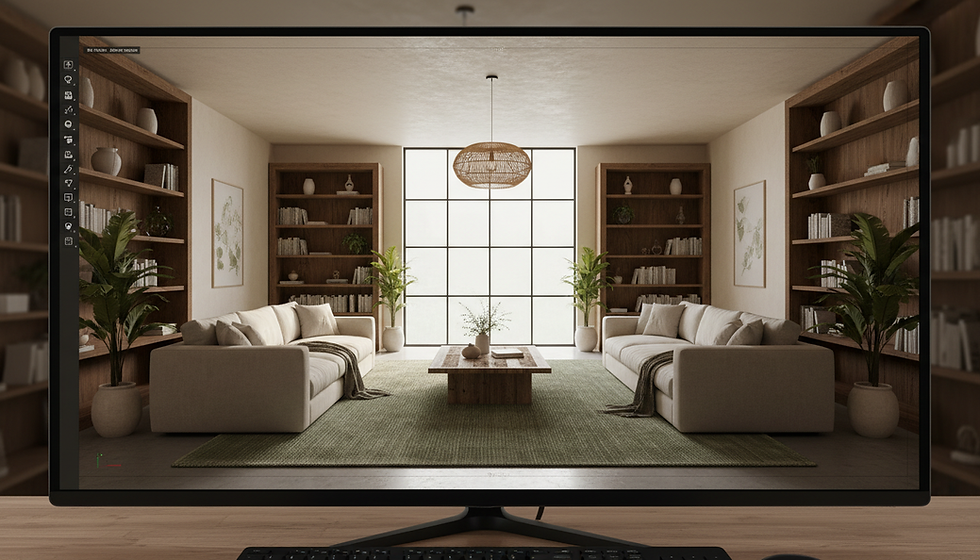
AI can automatically populate scenes with furniture, vegetation, and other elements based on style preferences or functional requirements. This reduces manual work and helps create complete, detailed environments faster.
Improved Accuracy
AI tools can detect inconsistencies or errors in models, such as structural issues or lighting problems, before finalizing visualizations. This reduces costly mistakes and ensures the design is both beautiful and feasible.
AI Tools Shaping the Industry
Several AI-driven tools have gained popularity for architectural visualization:
NVIDIA Omniverse
This platform uses AI to enable real-time collaboration and photorealistic rendering. Architects can work together on the same model from different locations, seeing changes instantly.
Lumion AI
Lumion integrates AI to automate tasks like sky replacement, object placement, and material enhancement, speeding up the visualization process without sacrificing quality.
DALL·E and Midjourney
These AI image generators help architects create concept art or mood boards by generating visuals from text prompts, inspiring new design directions.
Spacemaker AI
Focused on early-stage design, Spacemaker uses AI to analyze site conditions and optimize building layouts for sunlight, noise, and wind, feeding better data into visualization models.
Impact on Design Trends
AI is not only changing how visualizations are created but also influencing architectural design trends themselves.
Sustainability Focus
AI tools analyze environmental data to optimize building orientation, materials, and energy use. This drives a trend toward greener, more efficient designs that are easier to visualize and communicate.
Customization and Personalization
AI enables rapid generation of multiple design options tailored to client preferences. This flexibility encourages more personalized architecture rather than one-size-fits-all solutions.
Blurring Virtual and Physical Spaces
With AI-enhanced augmented reality (AR) and virtual reality (VR), architects can create immersive walkthroughs that blend real and digital elements. This trend is changing how clients experience and approve designs.
Complex Forms Made Simple
AI helps architects explore complex geometries and organic shapes by automating calculations and visualizations. This expands creative possibilities and pushes design boundaries.
Practical Examples of AI in Action
A Residential Project in Tokyo
An architecture firm used AI-powered rendering to produce photorealistic images of a compact urban home. The AI reduced rendering time by 80%, allowing the team to test different facade materials and lighting setups quickly. The client appreciated seeing multiple options in a short period, leading to faster approval.
Urban Planning in Copenhagen
City planners employed AI tools to simulate sunlight exposure and wind flow across a new neighborhood. These insights informed building placement and green space design, which were then visualized with AI-generated 3D models. The result was a more livable, sustainable urban environment.
Furniture Layout for a Commercial Space
Using AI scene generation, a design studio automatically arranged furniture and decor in a large office visualization. This saved days of manual work and helped the client visualize a functional, stylish workspace.
Challenges and Considerations
While AI offers many benefits, it also presents challenges:
Learning Curve
Adopting AI tools requires training and adjustment. Teams must invest time to understand how to integrate AI effectively into their workflows.
Data Quality
AI depends on high-quality data. Poor or biased datasets can lead to inaccurate visualizations or design suggestions.
Creative Control
Some architects worry that AI might limit creativity by suggesting conventional solutions. Balancing AI assistance with human intuition is key.
Cost
Advanced AI software and hardware can be expensive. Smaller firms need to weigh the investment against potential productivity gains.
Looking Ahead
AI will continue to evolve, offering even more powerful tools for architectural visualization and design. Integration with AR/VR, real-time collaboration, and smarter environmental analysis will become standard. Architects who embrace AI can deliver better designs faster, communicate ideas more clearly, and meet growing demands for sustainability and customization.
The future of architectural visualization is one where AI supports creativity and precision, helping architects build spaces that are both beautiful and functional.


Comments