LA Homes Sitting 48 Days Presentation Is the New Pricing
TL;DR As of mid-2026, LA homes are averaging about 48 days on market, up from about 46 last year. Median price is roughly flat year over year, around $1.1M. In a flat market, sellers cannot count on appreciation to do the work. Presentation is the lever you control.
If a listing is sitting in Los Angeles, the problem may not be exposure.
It may be the way the home shows in the first five seconds.
Buyers still move when a property feels clear, current, and easy to imagine living in. Analysts say well-presented homes are still drawing multiple offers, while overpriced listings sit and cut price.
That creates a simple choice for agents and sellers.
Cut the price later, or sharpen the presentation now.

What the numbers say
The LA market is not frozen. But it is not forgiving either.
As of mid-2026:
LA homes average about 48 days on market
That is up from about 46 days last year
The median price is roughly flat year over year, around $1.1M
Well-presented homes still draw multiple offers
Overpriced listings tend to sit, then cut price
That last point matters.
When prices were rising fast, sellers had more room for weak presentation. The market could cover mistakes.
In a flat market, buyers get pickier. They compare. They pause. They send the listing to someone else and ask, “What do you think?”
If the photos feel empty, dated, dark, or confusing, buyers fill in the blanks themselves.
Usually, they do not fill them in generously.
That is why presentation has become a pricing issue.
Not because staging changes the appraised value. Not because renderings make a bad price good.
Because presentation affects whether buyers believe the home is worth seeing, writing on, or competing for.
For agents trying to sell home faster Los Angeles, the first fix is not always a lower price. Sometimes it is a clearer story.
Why sitting costs more than staging
A price cut is easy to understand. It is also expensive.
Once a listing sits, every extra week can cost the seller in two ways.
First, there are carrying costs.
Mortgage payments, taxes, insurance, utilities, HOA dues, maintenance, cleaning, landscaping, and ongoing prep do not stop because showings slowed.
Second, there is negotiating power.
A fresh listing has energy. A stale listing invites questions.
Buyers ask:
Why has it not sold?
What is wrong with it?
How much room do they have?
Will they take another reduction?
Those questions change the tone of the offer.
Professional visuals cost money too. But compared with repeated carrying costs and a public price reduction, they are often a smaller, earlier risk.
That is the insurance argument.
Virtual staging, updated listing images, and renovation renderings will not rescue every listing. They will not fix a price that is clearly out of line.
But they can prevent a good property from looking worse than it is.
That matters most before the listing gets labeled as “sitting.”
What presentation actually means in 2026
Presentation is not just “nice photos.”
It is the full visual case for why the home deserves a showing.
In 2026, that usually means three things.
Photos that stop the scroll
The first image has to carry the listing.
It should make the property feel bright, clean, and understandable. Buyers should know what they are looking at without working for it.
That means no dark corners, no awkward angles, no half-open toilet lids, no clutter, and no dead-looking rooms.
Good photos do not oversell. They remove friction.
They help the buyer think, “I could see this.”
Virtual staging for empty or dated spaces
Vacant homes can look smaller than they are.
Dated homes can make buyers focus on the wrong thing.
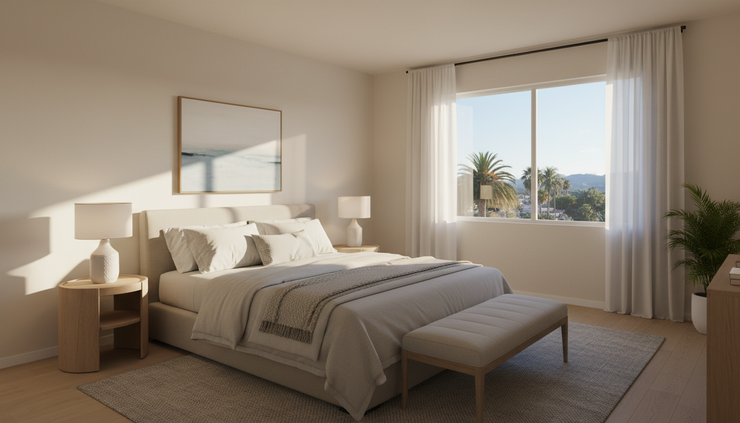
Virtual staging gives rooms a purpose. It helps buyers understand scale, flow, and lifestyle without the cost or delay of moving physical furniture in.
For a blank living room, that might mean showing a sofa, rug, art, and dining area.
For a dated bedroom, it might mean neutral styling that shifts attention back to light, size, and layout.
The goal is not to fake the home. The goal is to make the potential readable.
Clear disclosure matters. MLS rules and local guidance should be followed.
Renders that show renovation potential
Some homes need more than furniture.
They need imagination.
A dated kitchen, closed-off floor plan, awkward patio, or unfinished ADU space may be hard for buyers to interpret.
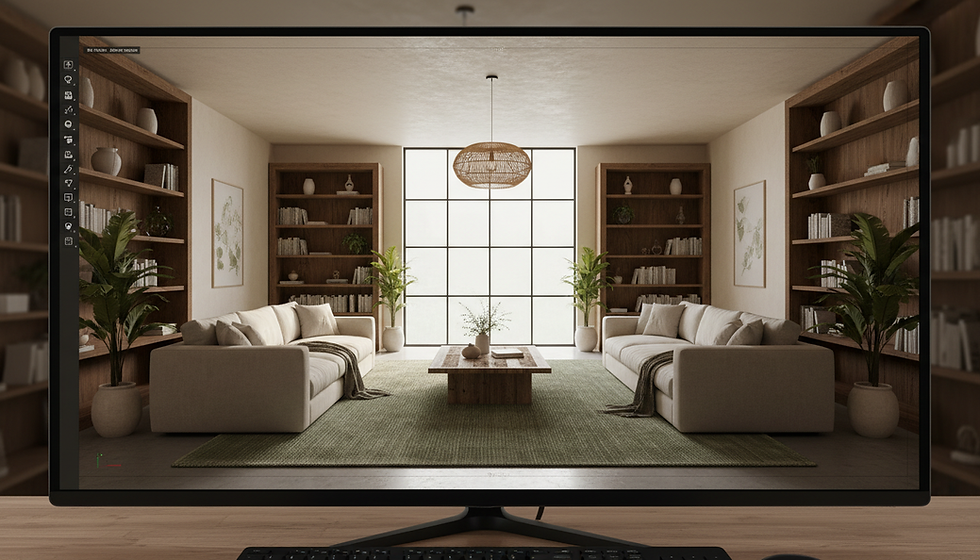
Renders can show a realistic improvement path:
A refreshed kitchen
A modernized bathroom
An open living area
A finished backyard
A furnished bonus room
A potential office, gym, or guest suite
This is especially useful when the home has good bones but poor first impressions.
The buyer still sees the real property. The render simply answers the question, “What could this become?”

Which listings need it most
Not every listing needs a full visual package.
Some homes already show well. Some have strong architecture, clean furniture, natural light, and a price that fits the market.
But certain listings are at higher risk of sitting.
Vacant homes
Empty rooms look cold online.
They also make scale harder to read. A buyer may not know if a bedroom fits a queen bed or if the living room can handle a sectional.
Virtual staging gives the space context.
It turns square footage into something buyers can understand quickly.
Dated homes
LA buyers often say they are open to projects.
Then they swipe past photos of orange tile, heavy cabinets, old carpet, or dark paint.
They are not always rejecting the house. They may be rejecting the mental workload.
Renders help reduce that workload.
They show how a dated room could look with new finishes, better light, and a cleaner layout.
Unusual layouts
Some homes do not photograph easily.
Split-level spaces, converted garages, bonus rooms, long narrow living areas, and awkward additions can confuse buyers.
Confusion kills momentum.
A visual plan can show how the home lives. It can label function without turning the listing into a puzzle.
For example, a strange extra room may become:
A nursery
A guest room
A home office
A media room
A workout space
The point is to give buyers a reason to keep looking.
Listings that already had traffic but no offers
If people are clicking but not showing, the issue may be the price, photos, or both.
If people are showing but not writing, the issue may be condition, confidence, or perceived cost to improve.
Visuals cannot answer every objection.
But they can frame the opportunity before the buyer frames the problem.

Does virtual staging actually help homes sell faster?
It can help, but it is not magic.
Virtual staging may help a listing perform better when the main issue is visual clarity. That includes vacant rooms, dated spaces, or layouts buyers struggle to understand.
It will not fix an unrealistic price, a major condition issue, or poor access for showings.
The honest use case is simple.
If buyers are not seeing the property’s value in the photos, better visuals can improve the first impression and support more serious interest.
That is often the difference between a listing that gets skipped and one that gets scheduled.
Presentation is the move before the price cut
In LA, 48 days on market changes the conversation.
The longer a home sits, the more buyers expect a deal. The seller loses time, confidence, and leverage.
Before taking another reduction, look at the listing the way a buyer sees it on a phone.
Is the first photo strong?
Do the rooms feel useful?
Does the home look current enough to compete?
Can buyers understand the upside without doing design work in their head?
If the answer is no, presentation is the next move.
3D Visionaries helps agents and sellers in El Segundo and across Los Angeles make listings easier to understand, easier to love, and easier to act on through virtual staging and 3D rendering.
Got a listing that’s sitting? Send it over, we’ll tell you what visuals would move it. Free assessment: 310.702.0797 / info@3d-visionaries.com


Comments